Alert
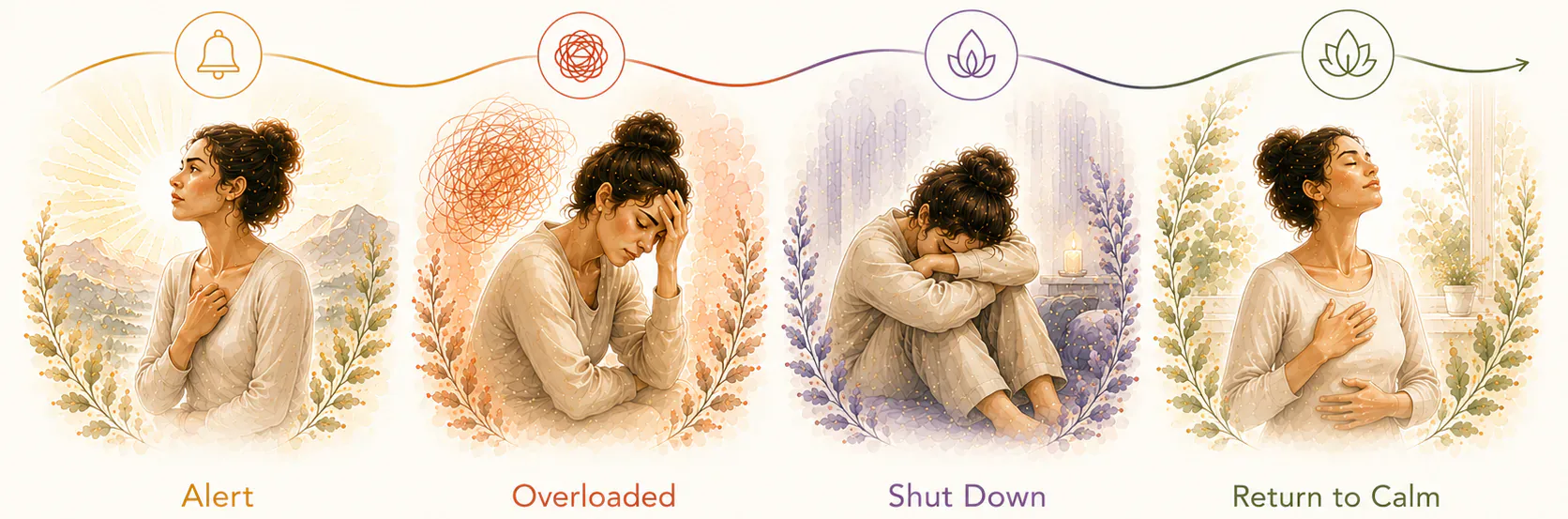
The body is ready to protect you. You may feel tense, reactive, restless, watchful, or unable to settle, even when nothing urgent is happening.



Calm your system. Regulate stress. Return to inner safety and ease.
Nervous-System Care
Stress is not only something you think about. It can become something your body carries: in the breath, muscles, digestion, sleep, posture, mood, and energy.
When life has been overwhelming, the nervous system may keep preparing for pressure even after the moment has passed. The body may tighten. The breath may become shallow. Sleep may suffer. Emotions may feel closer to the surface. Pain or tension may become more intense.
Living Pain Free offers gentle support for calming the system, creating inner safety, and helping the body remember what it feels like to rest.
What You May Notice
These signs do not mean anything is wrong with you. They can be understandable responses to pressure, pain, trauma, grief, responsibility, uncertainty, or long periods of holding everything together.
Your system may simply need more support, steadiness, and room to come down from survival mode.
Understanding the Pattern
The nervous system is designed to help you respond to challenge. It can mobilise energy when action is needed, and it can slow things down when too much has happened. The difficulty comes when the system gets stuck in protection and cannot easily return to ease.
The body is ready to protect you. You may feel tense, reactive, restless, watchful, or unable to settle, even when nothing urgent is happening.
The system has been carrying too much for too long. Small things may feel bigger, emotions may rise quickly, and the body may stay tight or tired.
When the system becomes overwhelmed, it may go quiet. You may feel heavy, numb, disconnected, unmotivated, or like you are moving through life on autopilot.
With enough safety and support, the body can begin to soften. Breath, attention, emotions, and energy may gradually become easier to work with.
How Sessions Help
Returning to calm is not about forcing yourself to relax. It is about creating enough safety for the body to stop guarding so hard. Sessions move at a pace your system can work with.
We begin by helping you notice the body in the present moment, without judgement or pressure to change everything at once.
Gentle breath, awareness, rest, and emotional support help signal to the system that it does not have to stay on high alert.
As the body feels safer, you can begin to reconnect with your needs, boundaries, feelings, and small choices that support daily life.
Daily-Life Support
Regulation is often built through repeated, gentle signals of safety. These signals may be simple, but they can help the body stop feeling so alone with what it is carrying.
Over time, this can support clearer thinking, steadier emotions, easier breathing, and a kinder relationship with the body.